There has never been a real democracy, and there never will be…
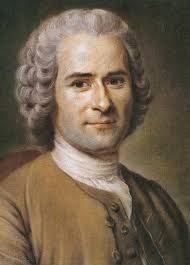 The Founding Fathers of the United States of America took great pains to create a republic because if there was a system of government they feared almost as much as the monarchy which they unburdened themselves from it was democracy for they felt it was nothing but a tyranny of the majority over the minority.
Yet today most people believe the United States of America was founded as a democracy; it is true that over the years the country has become more democratic than republican but that was not the intent.
The words in the title of this post come from Book III Chapter 4 of
“If we take the term in the strict sense, there never has been a real democracy, and there never will be. It is against the natural order for the many to govern and the few to be governed. It is unimaginable that the people should remain continually assembled to devote their time to public affairs, and it is clear that they cannot set up commissions for that purpose without the form of administration being changed.
“In fact, I can confidently lay down as a principle that, when the functions of government are shared by several tribunals, the less numerous sooner or later acquire the greatest authority, if only because they are in a position to expedite affairs, and power thus naturally comes into their hands.
Besides, how many conditions that are difficult to unite does such a government presuppose! First, a very small State, where the people can readily be got together and where each citizen can with ease know all the rest; secondly, great simplicity of manners, to prevent business from multiplying and raising thorny problems; next, a large measure of equality in rank and fortune, without which equality of rights and authority cannot long subsist; lastly, little or no luxury — for luxury either comes of riches or makes them necessary; it corrupts at once rich and poor, the rich by possession and the poor by covetousness; it sells the country to softness and vanity, and takes away from the State all its citizens, to make them slaves one to another, and one and all to public opinion.
This is why a famous writer [America’s Watchtower note: the writer he is referencing here is Montesquieu] has made virtue the fundamental principle of Republics; for all these conditions could not exist without virtue. But, for want of the necessary distinctions, that great thinker was often inexact, and sometimes obscure, and did not see that, the sovereign authority being everywhere the same, the same principle should be found in every well-constituted State, in a greater or less degree, it is true, according to the form of the government.
It may be added that there is no government so subject to civil wars and intestine agitations as democratic or popular government, because there is none which has so strong and continual a tendency to change to another form, or which demands more vigilance and courage for its maintenance as it is. Under such a constitution above all, the citizen should arm himself with strength [America’s Watchtower note: the translation I am reading interprets the word as “force” and not “strength”] and constancy, and say, every day of his life, what a virtuous Count Palatine said in the Diet of Poland: Malo periculosam libertatem quam quietum servitium. [America’s Watchtower note: this is translated as “I prefer dangerous liberty to tranquil to tranquil servitude”]
Were there a people of gods, their government would be democratic. So perfect a government is not for men.”
That is the end of the quoted text. This is the quote which most caught my attention: “it sells the country to softness and vanity, and takes away from the State all its citizens, to make them slaves one to another, and one and all to public opinion.”
Have truer words ever been written as you look at the state of America today where the government is constantly pitting one class of Americans against the other?
At the end of this text Rousseau seems to contradict himself when he insinuates that democracy is the perfect form of government despite its flaws due to the imperfection of man. These contradictions seem to run throughout the work as the author tries to draw a line of distinction between the role of government and the liberty of man. I don’t think he ever quite gets there but this is a fascinating read and there are parts of this work which will appeal to both all people regardless of which side of the political spectrum you align yourself with. I highly recommend this work even though I do not agree with some of it–in fact I strongly disagree with some of it. It gives us all an insight into some of what the Founding Fathers were reading at the time.





 America's Watchtower
You absolutely right!
Leslie
LikeLiked by 1 person
I try! Thank you.
LikeLiked by 1 person
http://www.theblaze.com/stories/2012/09/13/fact-check-does-soros-own-an-overseas-company-that-will-count-u-s-votes/
LikeLiked by 1 person
Soros is an evil man!
LikeLike
Great article! And sadly something most Americans have no idea of. I heard Dr. Larry Arn talking about this a while ago and it is clear the harm done by the French Revolution wasn’t lost on the Founders.
LikeLiked by 1 person
Thank you! I rushed this post because I was headed out, there was more I wanted to write about but I did not have the time.
LikeLike
Montesquieu was a favorite of the Founders. Great post, Steve. Too bad our young people are learning what the Founders gave us. Too bad we (The People) let our Founder’s ideals slip through our fingers.
LikeLiked by 1 person
https://nevadastatepersonnelwatch.wordpress.com/2015/02/07/the-secret-covenant-the-elites-manual-for-global-enslavement/
LikeLiked by 1 person
Yes he was! We need to keep the vision of the Founders alive but sadly the school system has other goals in mind.
LikeLike