Update: To read about the president pre-selecting reporters in his press conference held on 03/24 please see this article.
Do you remember when President Bush was seen rehearsing a tele-conference that he was about to hold with United States troops stationed in Iraq? Do you remember the uproar? The story was all over the blogs and the television.
Now comes this story about President Obama’s first prime time press conference and about how all of the reporters that were to ask his majesty questions were pre-screened and pre-selected before the press conference. Where is the outrage? Where is the uproar.
President Obama actually had to stop at the beginning of his question and answer session of the press conference and ask where two reporters were. Why? Because these were the first two reporters who were supposed to ask him questions. Questions that I am sure he got in advance.
The American Idol president is all too concerned about his image and about how he looks, public relations wise, rather than what he actually says or does. There is no desire on his part to actually take random questions from reporters because he is too afraid that he will say something that will make him look bad, or that he won’t know what to say at all.
Everything that President Obama says and does is an act, it is scripted, and he is the actor in the starring role. But when his supporting actors, the media, don’t show up he is revealed. The emperor has no clothes.
This of course is not being reported by the media at all. You would think the reporters that evidently are never going to be called upon by his majesty would want to make this story known but perhaps they are holding on to the notion that they will one day be selected to have the honor of asking the anointed one a question, after all it is because of them that Obama was elected in the first place. Eventually he has to return the favor, so they think. Or maybe they feel that if they report this story they will lose all hope of asking the president a question.
Either way, the fact that this story isn’t newsworthy confirms what we have always known as the truth, that the media is in bed with Barry Obama.


Boston College Under Fire for Displaying Crucifixes in Class Rooms
Cross posted at Grizzly Groundswell
Boston College is getting heat from some professors and students for displaying crucifixes in the classrooms. Hanging crucifixes in the classroom has been called “offensive and anti-intellectual” by one professor.
There is one small, slight, little problem with this argument- BOSTON COLLEGE IS A CATHOLIC SCHOOL! Just in case you were wondering the president of this PRIVATE school is a priest.
Students pay to go to this Catholic school and professors get paid to teach at this Catholic school, so if you do not like what is displayed at this Catholic school than shut up and go somewhere else. Students and teachers know when they either sign up to take or teach classes there that this is a Catholic school, if you are offended leave!
Boston College is refusing to give in on this issue and good for them, people know what they are getting into when they CHOOSE to go to school there so instead of trying to change the school perhaps they should second guess themselves for going to a school that doesn’t represent their beliefs.
I leave you with a quote from one student who gets it.
Boston College welcomes students, faculty and staff from all religious persuasions with welcome arms,” said senior Patrick Fouhy, 21. “But at the end of the day, we are still a Jesuit, Catholic university and that is a core part of our identity. Putting crucifixes up is a nice reminder of that
Sowing the Seeds of Revolution in New Hampshire (Bill Introduced That Puts Forth the Conditions for the Nullification of the US Constitution)
Cross posted on Grizzly Groundswell
I don’t know how I missed the following story but thanks goes out to Dominique at An Unlikely Perspective for providing me with a heads up on this story.
Last week three New Hampshire state representatives filed a resolution on behalf of the State-Federal Relations and Veterans Affairs Committee to affirm states rights based on the Jeffersonian principles. This bill is a warning to the federal government not to overstep its bounds.
Some of the text of the bill calls for a “nullification of the constitution” under certain conditions.
That any Act by the Congress of the United States, Executive Order of the President of the United States of America or Judicial Order by the Judicatories of the United States of America which assumes a power not delegated to the government of United States of America by the Constitution for the United States of America and which serves to diminish the liberty of the any of the several States or their citizens shall constitute a nullification of the Constitution for the United States
The bill then goes on to stipulate some of the possible violations that would render the constitution null and void:
I. Establishing martial law or a state of emergency within one of the States comprising the United States of America without the consent of the legislature of that State.
II. Requiring involuntary servitude, or governmental service other than a draft during a declared war, or pursuant to, or as an alternative to, incarceration after due process of law.
III. Requiring involuntary servitude or governmental service of persons under the age of 18 other than pursuant to, or as an alternative to, incarceration after due process of law.
IV. Surrendering any power delegated or not delegated to any corporation or foreign government.
V. Any act regarding religion; further limitations on freedom of political speech; or further limitations on freedom of the press.
VI. Further infringements on the right to keep and bear arms including prohibitions of type or quantity of arms or ammunition
The big issue here seems to be the right to keep and bear arms, Obama’s position on this issue is clouded at best, unconstitutional at worst.
At first I didn’t believe that this resolution was true but I did a little research and found out that this bill was indeed introduced in the New Hampshire house last week.
While this bill is going to go nowhere, it does manage to send a message and that message is, we are watching you.
Below is the full text of the bill
HCR 6 – AS INTRODUCED
2009 SESSION
09-0274
09/01
HOUSE CONCURRENT RESOLUTION 6
A RESOLUTION affirming States’ rights based on Jeffersonian principles.
SPONSORS: Rep. Itse, Rock 9; Rep. Ingbretson, Graf 5; Rep. Comerford, Rock 9; Sen. Denley, Dist 3
COMMITTEE: State-Federal Relations and Veterans Affairs
ANALYSIS
This house concurrent resolution affirms States’ rights based on Jeffersonian principles.
09-0274
09/01
STATE OF NEW HAMPSHIRE
In the Year of Our Lord Two Thousand Nine
A RESOLUTION affirming States’ rights based on Jeffersonian principles.
Whereas the Constitution of the State of New Hampshire, Part 1, Article 7 declares that the people of this State have the sole and exclusive right of governing themselves as a free, sovereign, and independent State; and do, and forever hereafter shall, exercise and enjoy every power, jurisdiction, and right, pertaining thereto, which is not, or may not hereafter be, by them expressly delegated to the United States of America in congress assembled; and
Whereas the Constitution of the State of New Hampshire, Part 2, Article 1 declares that the people inhabiting the territory formerly called the province of New Hampshire, do hereby solemnly and mutually agree with each other, to form themselves into a free, sovereign and independent body-politic, or State, by the name of The State of New Hampshire; and
Whereas the State of New Hampshire when ratifying the Constitution for the United States of America recommended as a change, “First That it be Explicitly declared that all Powers not expressly & particularly Delegated by the aforesaid are reserved to the several States to be, by them Exercised;” and
Whereas the other States that included recommendations, to wit Massachusetts, New York, North Carolina, Rhode Island and Virginia, included an identical or similar recommended change; and
Whereas these recommended changes were incorporated as the ninth amendment, the enumeration in the Constitution, of certain rights, shall not be construed to deny or disparage others retained by the people, and the tenth amendment, the powers not delegated to the United States by the Constitution, nor prohibited by it to the States, are reserved to the States respectively, or to the people, to the Constitution for the United States of America; now, therefore, be it
Resolved by the House of Representatives, the Senate concurring:
That the several States composing the United States of America, are not united on the principle of unlimited submission to their General Government; but that, by a compact under the style and title of a Constitution for the United States, and of amendments thereto, they constituted a General Government for special purposes, — delegated to that government certain definite powers, reserving, each State to itself, the residuary mass of right to their own self-government; and that whensoever the General Government assumes undelegated powers, its acts are unauthoritative, void, and of no force; that to this compact each State acceded as a State, and is an integral party, its co-States forming, as to itself, the other party: that the government created by this compact was not made the exclusive or final judge of the extent of the powers delegated to itself; since that would have made its discretion, and not the Constitution, the measure of its powers; but that, as in all other cases of compact among powers having no common judge, each party has an equal right to judge for itself, as well of infractions as of the mode and measure of redress; and
That the Constitution of the United States, having delegated to Congress a power to punish treason, counterfeiting the securities and current coin of the United States, piracies, and felonies committed on the high seas, and offences against the law of nations, slavery, and no other crimes whatsoever; and it being true as a general principle, and one of the amendments to the Constitution having also declared, that “the powers not delegated to the United States by the Constitution, nor prohibited by it to the States, are reserved to the States respectively, or to the people,” therefore all acts of Congress which assume to create, define, or punish crimes, other than those so enumerated in the Constitution are altogether void, and of no force; and that the power to create, define, and punish such other crimes is reserved, and, of right, appertains solely and exclusively to the respective States, each within its own territory; and
That it is true as a general principle, and is also expressly declared by one of the amendments to the Constitution, that “the powers not delegated to the United States by the Constitution, nor prohibited by it to the States, are reserved to the States respectively, or to the people;” and that no power over the freedom of religion, freedom of speech, or freedom of the press being delegated to the United States by the Constitution, nor prohibited by it to the States, all lawful powers respecting the same did of right remain, and were reserved to the States or the people: that thus was manifested their determination to retain to themselves the right of judging how far the licentiousness of speech and of the press may be abridged without lessening their useful freedom, and how far those abuses which cannot be separated from their use should be tolerated, rather than the use be destroyed. And thus also they guarded against all abridgment by the United States of the freedom of religious opinions and exercises, and retained to themselves the right of protecting the same. And that in addition to this general principle and express declaration, another and more special provision has been made by one of the amendments to the Constitution, which expressly declares, that “Congress shall make no law respecting an establishment of religion, or prohibiting the free exercise thereof, or abridging the freedom of speech or of the press:” thereby guarding in the same sentence, and under the same words, the freedom of religion, of speech, and of the press: insomuch, that whatever violated either, throws down the sanctuary which covers the others, and that libels, falsehood, and defamation, equally with heresy and false religion, are withheld from the cognizance of federal tribunals. That, therefore, all acts of Congress of the United States which do abridge the freedom of religion, freedom of speech, freedom of the press, are not law, but are altogether void, and of no force; and
That the construction applied by the General Government (as is evidenced by sundry of their proceedings) to those parts of the Constitution of the United States which delegate to Congress a power “to lay and collect taxes, duties, imports, and excises, to pay the debts, and provide for the common defense and general welfare of the United States,” and “to make all laws which shall be necessary and proper for carrying into execution the powers vested by the Constitution in the government of the United States, or in any department or officer thereof,” goes to the destruction of all limits prescribed to their power by the Constitution: that words meant by the instrument to be subsidiary only to the execution of limited powers, ought not to be so construed as themselves to give unlimited powers, nor a part to be so taken as to destroy the whole residue of that instrument: that the proceedings of the General Government under color of these articles, will be a fit and necessary subject of revisal and correction; and
That a committee of conference and correspondence be appointed, which shall have as its charge to communicate the preceding resolutions to the Legislatures of the several States; to assure them that this State continues in the same esteem of their friendship and union which it has manifested from that moment at which a common danger first suggested a common union: that it considers union, for specified national purposes, and particularly to those specified in their federal compact, to be friendly to the peace, happiness and prosperity of all the States: that faithful to that compact, according to the plain intent and meaning in which it was understood and acceded to by the several parties, it is sincerely anxious for its preservation: that it does also believe, that to take from the States all the powers of self-government and transfer them to a general and consolidated government, without regard to the special delegations and reservations solemnly agreed to in that compact, is not for the peace, happiness or prosperity of these States; and that therefore this State is determined, as it doubts not its co-States are, to submit to undelegated, and consequently unlimited powers in no man, or body of men on earth: that in cases of an abuse of the delegated powers, the members of the General Government, being chosen by the people, a change by the people would be the constitutional remedy; but, where powers are assumed which have not been delegated, a nullification of the act is the rightful remedy: that every State has a natural right in cases not within the compact, (casus non foederis), to nullify of their own authority all assumptions of power by others within their limits: that without this right, they would be under the dominion, absolute and unlimited, of whosoever might exercise this right of judgment for them: that nevertheless, this State, from motives of regard and respect for its co-States, has wished to communicate with them on the subject: that with them alone it is proper to communicate, they alone being parties to the compact, and solely authorized to judge in the last resort of the powers exercised under it, Congress being not a party, but merely the creature of the compact, and subject as to its assumptions of power to the final judgment of those by whom, and for whose use itself and its powers were all created and modified: that if the acts before specified should stand, these conclusions would flow from them: that it would be a dangerous delusion were a confidence in the men of our choice to silence our fears for the safety of our rights: that confidence is everywhere the parent of despotism — free government is founded in jealousy, and not in confidence; it is jealousy and not confidence which prescribes limited constitutions, to bind down those whom we are obliged to trust with power: that our Constitution has accordingly fixed the limits to which, and no further, our confidence may go. In questions of power, then, let no more be heard of confidence in man, but bind him down from mischief by the chains of the Constitution. That this State does therefore call on its co-States for an expression of their sentiments on acts not authorized by the federal compact. And it doubts not that their sense will be so announced as to prove their attachment unaltered to limited government, whether general or particular. And that the rights and liberties of their co-States will be exposedto no dangers by remaining embarked in a common bottom with their own. That they will concur with this State in considering acts as so palpably against the Constitution as to amount to an undisguised declaration that that compact is not meant to be the measure of the powers of the General Government, but that it will proceed in the exercise over these States, of all powers whatsoever: that they will view this as seizing the rights of the States, and consolidating them in the hands of the General Government, with a power assumed to bind the States, not merely as the cases made federal, (casus foederis,) but in all cases whatsoever, by laws made, not with their consent, but by others against their consent: that this would be to surrender the form of government we have chosen, and live under one deriving its powers from its own will, and not from our authority; and that the co-States, recurring to their natural right in cases not made federal, will concur in declaring these acts void, and of no force, and will each take measures of its own for providing that neither these acts, nor any others of the General Government not plainly and intentionally authorized by the Constitution, shall be exercised within their respective territories; and
That the said committee be authorized to communicate by writing or personal conferences, at any times or places whatever, with any person or person who may be appointed by any one or more co-States to correspond or confer with them; and that they lay their proceedings before the next session of the General Court; and
That any Act by the Congress of the United States, Executive Order of the President of the United States of America or Judicial Order by the Judicatories of the United States of America which assumes a power not delegated to the government of United States of America by the Constitution for the United States of America and which serves to diminish the liberty of the any of the several States or their citizens shall constitute a nullification of the Constitution for the United States of America by the government of the United States of America. Acts which would cause such a nullification include, but are not limited to:
I. Establishing martial law or a state of emergency within one of the States comprising the United States of America without the consent of the legislature of that State.
II. Requiring involuntary servitude, or governmental service other than a draft during a declared war, or pursuant to, or as an alternative to, incarceration after due process of law.
III. Requiring involuntary servitude or governmental service of persons under the age of 18 other than pursuant to, or as an alternative to, incarceration after due process of law.
IV. Surrendering any power delegated or not delegated to any corporation or foreign government.
V. Any act regarding religion; further limitations on freedom of political speech; or further limitations on freedom of the press.
VI. Further infringements on the right to keep and bear arms including prohibitions of type or quantity of arms or ammunition; and
That should any such act of Congress become law or Executive Order or Judicial Order be put into force, all powers previously delegated to the United States of America by the Constitution for the United States shall revert to the several States individually. Any future government of the United States of America shall require ratification of three quarters of the States seeking to form a government of the United States of America and shall not be binding upon any State not seeking to form such a government; and
That copies of this resolution be transmitted by the house clerk to the President of the United States, each member of the United States Congress, and the presiding officers of each State’s legislature.
Video Tribute: Abraham Lincoln’s 200th Birthday
Today the father of the Republican party turns 200 years old.
Here are a couple of tribute videos.
Sen. Tom Harkin Says “We Need the Fairness Doctrine”
Add Sen. Tom Harkin to the growing list of Democrats who have come out in favor of reinstating the fairness doctrine. Tom Harkin is so enthused about the prospect that when he appeared on a liberal radio talk show he didn’t even have to be asked about it, he volunteered his approval of the restriction of the freedom of speech and freedom of the press known as the fairness doctrine:
we gotta get the Fairness Doctrine back in law again
Democrats feel that the fairness doctrine must be reinstated because talk radio is the last place where conservative ideas dominate. They want to stifle conservatives as much as possible instead of debating them on the merits of their ideas.


Democrats Allow Tax Cheat Charlie Rangel to Keep His Committee Chair
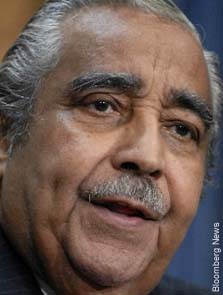 According to this article, Democrats voted to continue probing Charlie Rangeland his personal finances and his little tax problems. Charlie Rangel is the chairman of the House Ways and Means Committee, as such he is responsible for writing the tax laws that he broke and his new boss is Timothy Geithner, renown tax cheat extraordinaire. Oh the tangled web we weave.
But the part that I find the most interesting is the fact that they let this tax cheat keep his committee chair. No rest for the wicked.
Even as the probe into Charlie Rangel expands from his tax cheating into his passing out favors for lobbyists the Democrats beat back a Republican effort to remove him because of the following blatant conflict of interest.
He preserved a loophole in tax laws for an oil company that donated $5 million to the Rangel Center. And all this time I thought that bush was the oil man.
Democrats loved to talk about the culture of corruption when it was Republicans who were involved but now that they have a chance to act on the rhetoric, the Democrats look the other way when it is one of their own.
Cross posted at Grizzly Groundswell
As I write this, the word is that the senate and the house have reached an agreement on the stimulus bill. And if this story is true than it has been reached without the help of the Republicans because they were not invited to the debate over the stimulus.
The fact that Democrats held the negotiations behind closed doors without the Republicans just happens to be another broken promise by Obama. The following statement is from Obama’s official “office of the President-elect” website, change.gov:
The administration and Democrats in congress have tried to keep this bill and it’s contents under lock and key since its inception. The administration is trying to hurry this bill through the process before the American people can see what is in it. So much for the idea of the open and transparent government.
Back to the issue at hand, the barring of Republicans during the final negotiations of this bill. I have made my feelings about this bill well known, I have made my feelings about how I feel this bill once implemented will fair. I don’t like it and I don’t think it will succeed at stimulating the economy.
Because of my feelings on this bill and what the end result of this bill will be, I feel that the Democrats just did the Republicans a huge favor. Thank you! The Democrats now have sole ownership of this legislation. If this bill does work than it could be the end of the Republican party in regards to majority rule for years to come, however if it fails, and I think that it will, the Democrats in Obama’s first month in office have just handed the house and senate back over to the Republicans in 2010.
I believe that this spending bill will deepen the recession just as FDR’s New Deal deepened the depression, I am not happy about that and I hope that too much damage is not done before we can correct the problems that this legislation will cause.
In the end, the fact that out of over 150 total Republicans in Washington only three will have voted for this stimulus, combined with the fact that Republicans were not even allowed to debate the final stimulus bill, if this bill fails and the economy worsenspeople will turn back to the Republicans. Republicans can honestly claim that they had absolutely no part in this bill.
People will begin to turn on the non-inclusive Democrats, they will remember that Democrats were not willing to listen to the Republican’s concerns.
If this bill fails it will have taken Barry Obama less than one month to destroy all of the good will that the Democrats have spent the last four years building up. In his first month in office Barry Obama may have already sealed the fate of the Democrats in 2010, for better or worse. Win or lose.
Massachusetts May Tax Residents Per Mile Driven (Chips to be Installed in Inspection Stickers)
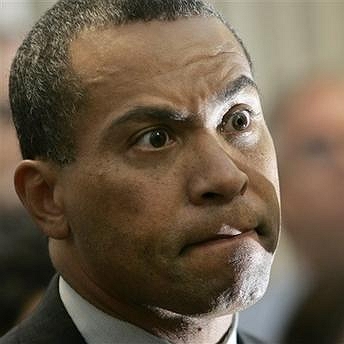 Last November the voters of Massachusetts had the chance to repeal the state income tax but the measure failed by about 70%-30% if my memory serve me. The special interests in Massachusetts were able to use scare tactics to convince the voters that repealing the income tax would be irresponsible. These groups claimed that if the tax was repealed that the state would be forced to either raise other taxes or fire police and fire fighters.
But once the governor saw that 70% of the people didn’t mind paying taxes, all bets were off. The people have shown that taxes are acceptable to them and now the governor is ready to fleece the people of Massachusetts for all that he can. On top of paying that income tax Massachusetts is considering many more taxes on top of the income tax. There are proposals to tax soda, candy bars, flavored water, toll increases, and gas tax increases to name a few. The governor is also trying to follow his subjects over the New Hampshire border by unconstitutionally trying to make New Hampshire businesses charge Massachusetts resident a sales tax for anything that they buy in New Hampshire. More on the governor following Massachusetts residents in a moment.
The governor is proposing as much as a 29 cent gas tax increase that would make the Massachusetts gas tax far and away the highest in the nation. But buried in this article about the possible gas tax increase is a very interesting tidbit about another plan that the governor has to tax his loyal subjects.
Patrick is also considering a new system that would charge drivers based on the miles they travel. Those trips would be measured by a chip installed in a vehicle inspection sticker.
Somehow the fact that the governor of Massachusetts wants to put a chip in the inspection stickers of Massachusetts resident’s cars only rates one paragraph in the entire article buried towards the end.
Governor Deval Patrick isn’t content with taxing the people of Massachusetts for just about everything that they do or buy in his state, he wants to follow them over the border and tax them on what they buy out of state, and he wants to just follow them and tax them for wherever they decide to go-period.
This is the sad state of affairs in Massachusetts, and the country in general. This is not the first state to talk about implementing a tax on miles driven and it won’t be the last. Once this idea gets noticed around the country more and more states will try to implement it, and why stop there? A federal tax on miles driven would naturally be next. President Obama will want in on the deal.
But Massachusetts residents have nobody to blame but themselves as they voted in favor of paying taxes last November when they refused to send a message to the governor. Actually they did send a message to the governor, it was the wrong message, it was the message that if some taxes are good, more taxes must be better. That is not a wise idea when you have a tax and spend liberal in charge of the state. Massachusetts residents gave Deval Patrick and inch and now he is taking a mile– literally.